⸻ A Live Conversation
Danny Mantle
"Growing up Mantle"
Thursday, June 18,
2026
7:00 PM ET
4:00 PM PT
60 minutes
Limited seats available · Replay access included
⸻ About the Speaker
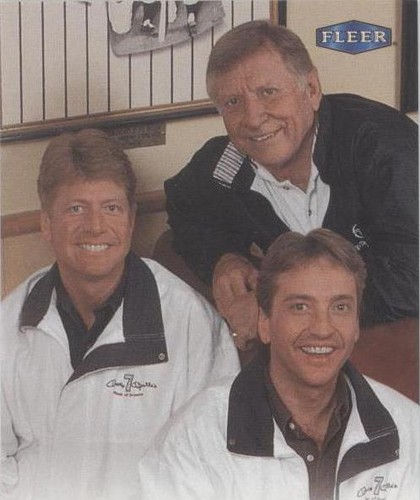
Danny Mantle
A conversation about being the son of a man whose name was bigger than any room he ever walked into. Danny Mantle was the youngest of Mickey Mantle’s four boys, born in 1960 into a Dallas house where his father was, for half the year, the most famous baseball player in America, and for the other half, a man carrying the weight of his own father’s expectations behind him every day of his life. Mickey was not a Pee Wee dad. He did not teach his sons to throw a curve. By Danny’s own telling, Mickey was afraid to push them, on account of what his own father Mutt had done to him, and he wanted his boys to have a childhood instead. That choice was a gift, and it was also its own kind of pressure, because the world still expected you to be a Mantle even if your father did not. This session is for the kids in the room who are carrying a name they did not pick, the kids being told they should be following in someone else’s footsteps, and the parents trying to figure out where the line is between holding the door open and pushing their child through it.
Danny Mantle is the youngest of Mickey and Merlyn Mantle’s four sons, born March 19, 1960, into a Dallas household where his father was the most famous baseball player alive. Mickey was the New York Yankee, the three-time MVP, the 1956 Triple Crown winner, the man Casey Stengel had publicly announced was the rightful heir to Babe Ruth. He was also, for the part of the year he was home, just dad. Danny did not play professional baseball. None of the four Mantle brothers really did. Mickey himself made sure of that.
In a 2003 profile in Men’s Journal, Danny put it plainly: “He wasn’t one for coming out to Pee Wee games or teaching us to throw a curve. He got mobbed wherever he went in public, so, of course, we understood. But I always got the feeling he was afraid to push us, on account of what his dad did. It seemed like he wanted us to have a childhood, like that was the greatest gift he could give us.” Mickey’s own father Mutt was a zinc miner and former semipro shortstop who put a baseball in Mickey’s crib hours after he was born and dragged him out for batting practice before the boy could read. Mutt died of Hodgkin’s lymphoma at 39, with Mickey at 20 already a Yankee. Mickey carried the weight of his own father’s expectations the rest of his playing days and, by every account from those who knew the family, deliberately did not lay that weight on his own sons. What Danny and his brothers did with their dad instead was play golf, hunt, fish, and run around major league clubhouses in the summers while Mickey worked.
After his father’s death in August 1995 from liver cancer at 63, Danny and his brother David rose from grief to lead a national push for organ donation awareness on behalf of the Mickey Mantle Foundation, which Mickey had established earlier that summer after his own liver transplant. The brothers helped distribute roughly eight million organ donor cards in the shape of baseball cards. The year that followed saw a sharp increase in registered donors across the country. In 1996, Danny co-authored A Hero All His Life with HarperCollins, the family memoir written together by Merlyn, Mickey Jr., David, and Danny, intended as the family’s own account of who Mickey was at home. Today Danny lives in Texas, oversees the official Mickey Mantle estate alongside David, and makes selective public appearances tied to his father’s legacy and the causes the family carries forward.
⸻ The Conversation
What You Might Hear
A real, honest conversation about the successes, the struggles, and the role parents and coaches played along the way to the Big Leagues.
Take Away · 01
Take Away · 02
Take Away · 03
⸻ Some of the Questions You May Hear
Some of the questions from this session include:
The session runs about 30 minutes of moderated conversation followed by audience Q&A. The conversation goes where it wants to go.
- "1.Take us back to being eight, nine, ten years old in Dallas in the late 1960s. Your dad is in the middle of his last Yankee seasons. From the inside of the Mantle house, what did your dad's job look like on a regular Tuesday in October? Not the legend version. The real one."
- "2.Your dad has been quoted, by you and your brothers, saying he was afraid to push you toward baseball because of what his own father Mutt had done to him. From a kid's perspective, what did that actually look like? Was it a relief, was it confusing, did any part of you ever wish he would push you a little more?"
- "3.Even when your dad was not pushing you toward baseball at home, the rest of the world clearly was. What was it like to walk into a classroom or a Little League field at twelve years old with that last name, and at what point did you figure out what you were and were not going to do with it?"
⸻ Career Profile
By the numbers.
⸻ What we are not
Sit in with your kid for this conversation.
Not a clinic. Not a meet and greet. A real conversation about the bigger thing baseball actually teaches, with one of the few people in the game who can speak to it from three generations of evidence.
- Live audience Q&A
- Replay access for seat holders
- Parent + youth athlete welcome